“ I refuse to spend my life trapped inside a glass box ”
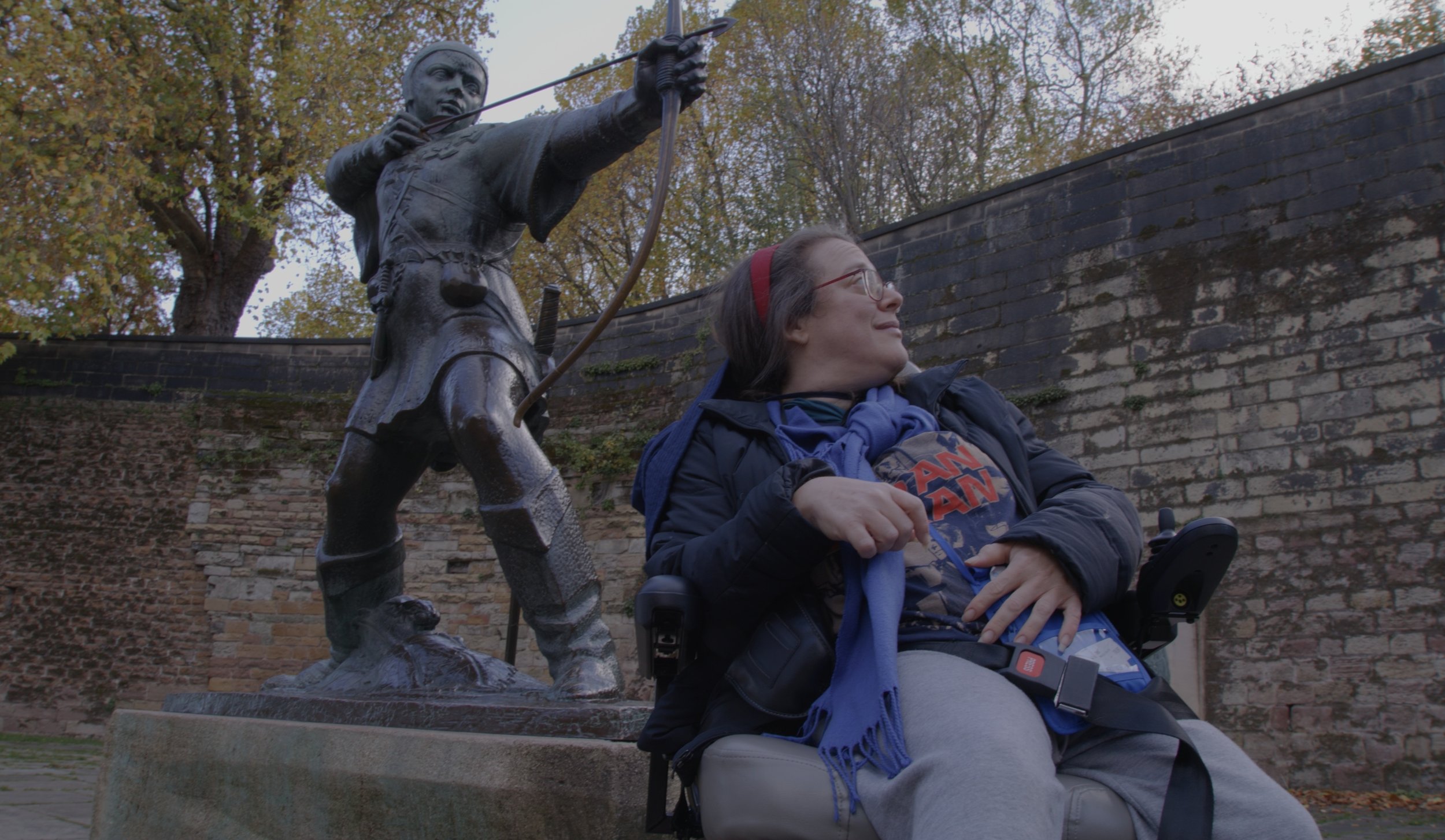
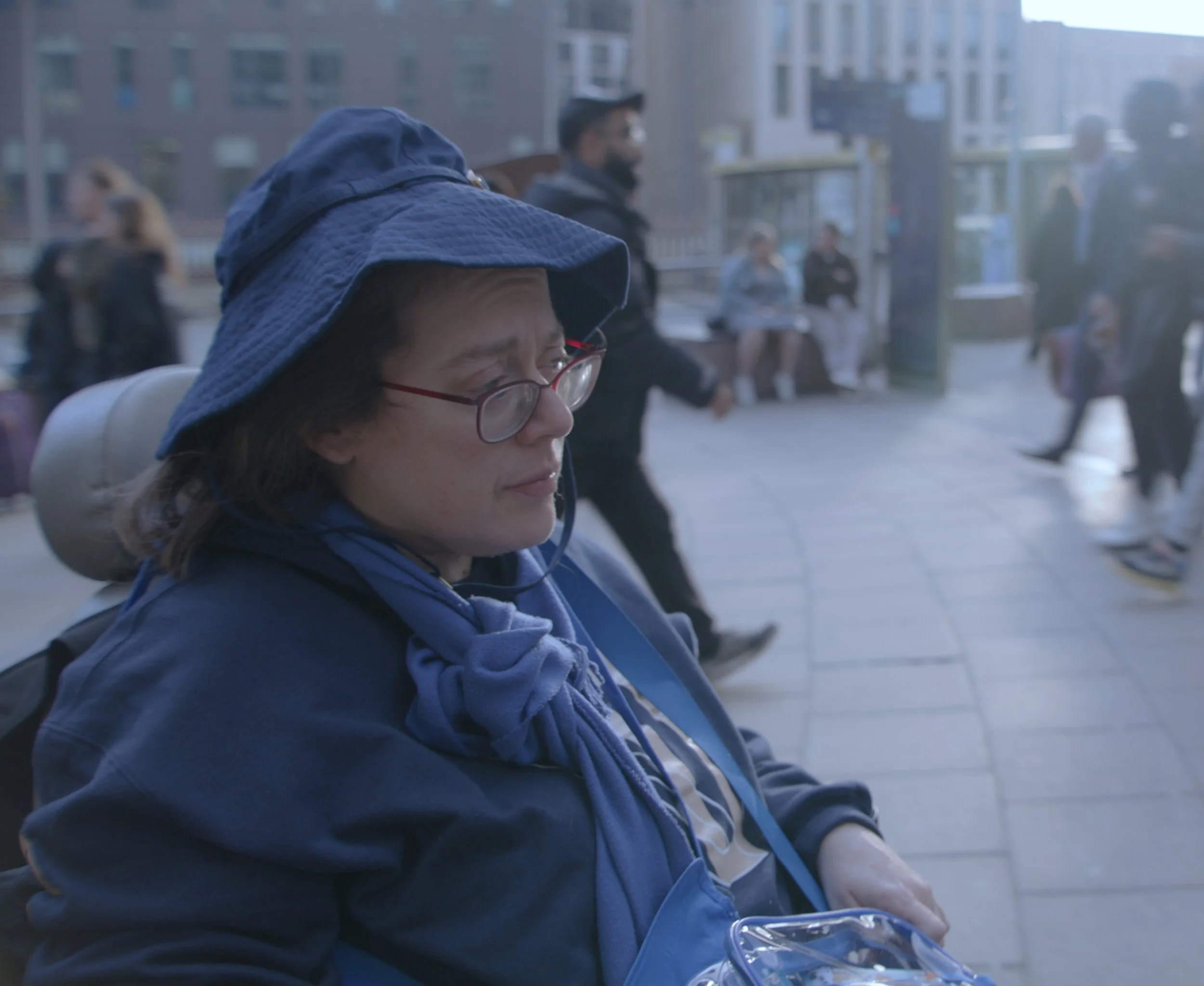
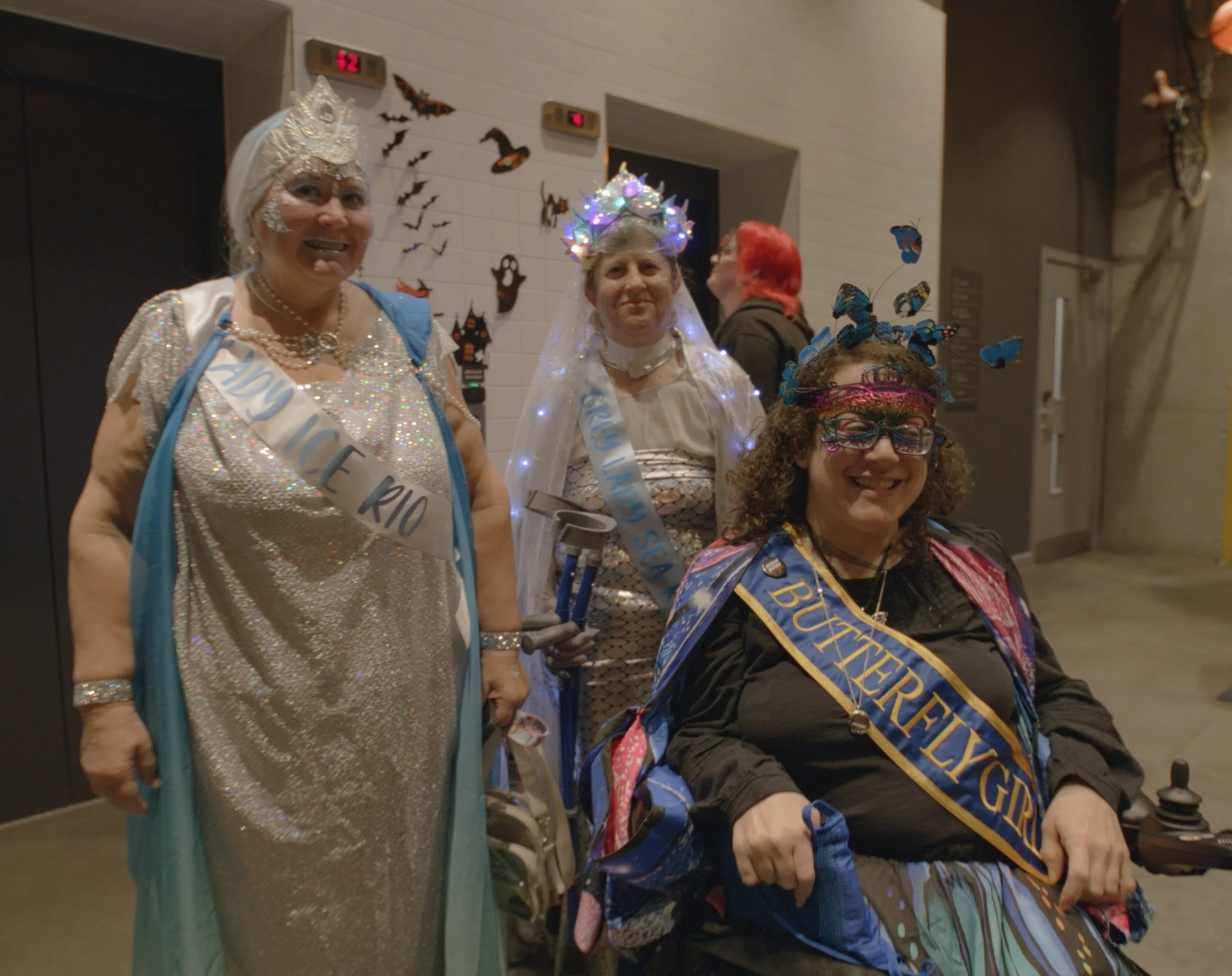
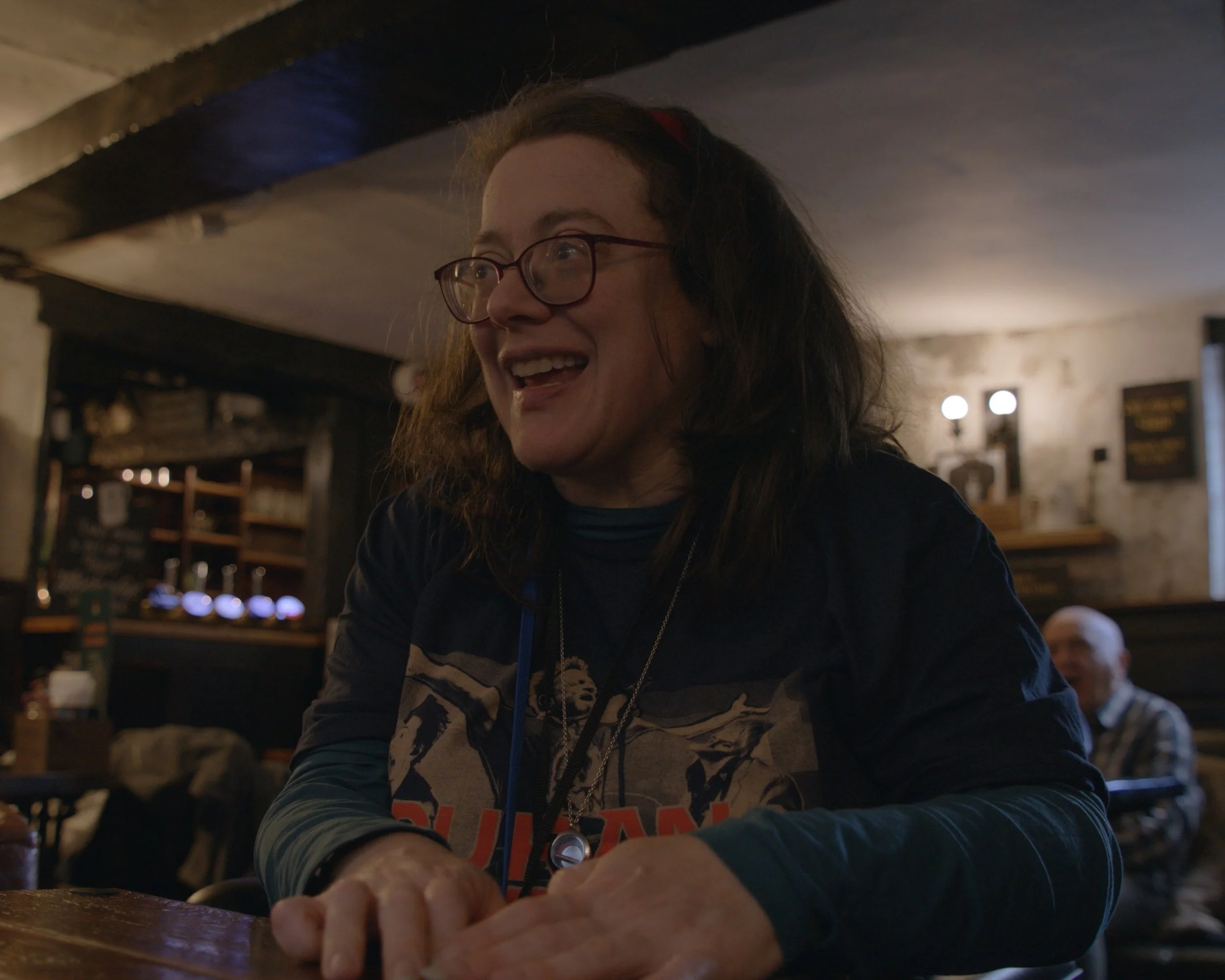
I have 3 goals in creating this documentary. The first is to tell a realistic story about a middle-aged woman with cerebral palsy who has a significant mobility impairment. I have always loved films but I have not seen any films like the one I am making. In college, I wrote an English paper on portrayals of persons with disabilities in the media. One of my source materials was a book called, “Images of the Disabled: Disabling Images”. That book was disturbing as it reflected on common stereotypes-the pitied person with a disability at one end of the spectrum or a “supercrip”. In my mind an example of a supercrip is a person with no arms nor legs who climbs Mt. Everest by himself at the other end of the spectrum. I don’t think I fit at either end of the spectrum.
I am an average woman with only a great deal of determination and creativity which could be my superpowers. I also have the love for, inspiration and joy from Duran Duran’s music which I call, “the guiding light of my creative and determined soul”. I want my story to reflect realities and what can be done even on one’s own.
The second goal of this documentary is to promote disability rights. In this divisive moment in American history, I reflect fondly on my student days protesting with American Disabled for Attendant Programs Today (ADAPT), and the fight to keep persons with disabilities out of nursing homes by providing community -based attendant services that assist in activities of daily living. The cause of disability rights can bring people together among races, ethnic backgrounds, gender identities, and socioeconomic classes, etc. Everyone who is living ages, and infirmities and injuries can strike at any time to anyone. I haven’t met any living person who is immune. So why doesn’t society want to be much better prepared for the possibility of disability? Especially after the passage of the disability rights laws in the U.S., the Education for the Handicapped Act (now the Individuals with Disabilities Education Act), the Rehabilitation Act of 1973 which was a key focus of the fantastic documentary, “Crip Camp”, and the Americans with Disabilities Act of 1990’ persons with disabilities have a chance to be successful and productive members of society. Why doesn’t society allow us to reach our full potential personally and economically?
Of course, there is much more than needs to be done as my documentary will illustrate. I want to strengthen the chances of persons with disabilities of being successful. One thing that I have not seen discussed publicly very often is what happens when an older single person with a significant mobility impairment and modest means no longer has family support. I have seen one answer: That older person with a significant mobility impairment might have to go into a nursing home. One of my best friends who was a lawyer like me and around my age and also similarly significantly mobility impaired was forced into a nursing home at age 50. This happened to her after the passing of her parenand being forced into the poorhouse by difficulties of finding gainful employment and unscrupulous practices of home health agencies. I am well aware that I am not immune to those unfortunate circumstances. So I want to have the most enjoyment out of my life while I fight to remain able to care for myself. I also don’t have family support at this point in my life and have no home health aide because I have seen the downside of having to rely on that type of care. Besides, the drain of one’s financial resources, one can become so reliant on home health aides, that one loses the ability to do hardly anything for oneself. I have a lot of creative ideas to survive day-to-day disability life successfully with a significant mobility impairment. I would like a platform to share those ideas sometime soon.
My third goal for this documentary is also about wanting to express my tremendously heartfelt gratitude for what happened to me at a Duran Duran show in 1987. At that show, I had taken a special object to show to Duran Duran. Most girls were throwing cuddly toys or their underwear at Duran Duran during their shows, However, with my being on crutches at the timeI couldn’t do anything like that.
The special object was a newspaper article written about me, my lonely teenage life at age 14, and my volunteer work at a hospital and a nursing home in my hometown. I didn’t seek out the publicity. The hospital where I was volunteering wanted to get publicity for its Volun-teen program and thought I would be a good subject for the article. In the article, I commented that being a resident in a nursing home seemed to be a very sad fate for anyone. Little did my teenage self understand that it was and still is quite common for relatively young adults with a significant disabilities to wind up in a nursing home. While volunteering at a local nursing home around the time, I encountered a woman with a similar mobility impairment who had to move in at age 39 because her parents couldn’t take care of her anymore. However, my article ended on a more positive note. I mentioned that I was crazy about Duran Duran and some things they say really inspire me such as, “Basically speaking if you’ve got something in mind, you shouldn’t give up until you’ve got it. Otherwise you don’t stand a chance.”That quote was attributed to Simon le Bon, the lead singer of Duran Duran. He was referring to his attitude toward pursuing a career in the music business, but commented that the quote could refer to things more broadly.
I attended the 1987 concert with my able-bodied friend Paula, who was my mom’s boss's daughter. Paula was a few years older than I. Thanks to her, we had tickets in the 3rd row, In the days before scalpers and bots as well as the additional challenges of trying to order good tickets quickly online while having impaired hand coordination there was a chance for the average fan to obtain good seats. Paula had the brilliant idea to call Duran Duran’s record company to get early bird knowledge of Duran Duran’s concert dates. Third row was the closest I had ever seen to Duran Duran. I was so excited to see them this close! At my first Duran Duran concert a few years earlier I was in the wheelchair seating section. I was in an area off to side and parallel to the stage where I was even unable to see the video on the screen above the stage. My seat was worse than terrible!
So at my second Duran Duran show, I wanted only two realistic things: I wanted no one to stand up on their chair in front of me at the show, so I could see, and to get my newspaper article backstage.I quickly scribbled my name and address, the comment: “I love you so much,” and the behest to please write me back as my message to Duran Duran in !the top margin of the article. I gave the article to Paula to hand to anyone who would get the article backstage. A few minutes later, Paula returned and said she had handed off the article to a guy near the backstage area but she had no idea what happened to it after that.
The security personnel at the 1987 concert took good care of me. I was able to stand on my crutches and move to the front of the stage near Warren Cuccurullo, the touring guitarist and not yet an official member of the band Duran Duran. No one seemed to mind. I was under 5 feet tall.
Then the most amazing thing happened! Midway through the concert, stage hands brought out a card chair and placed it onstage in front of my position now in the front row. Then my heartthrob since age 12, Simon le Bon appeared in a long white chauffeur coat and white hat and started singing, “The Chauffeur”, During that beautiful song, Simon looked over at me and raised his eyebrows as an act of recognition. I was only 15 years old. Due to my disability, my style was determined by my mother who dressed me very conservatively like her. So in the midst of screaming “I love you!” at the top of my lungs and trying to hand signal “I love you” with one hand while struggling to maintain my balance on my crutches, I had to wonder what he was thinking.
At the pause near the end of the concert before the encores, one of the green-shirted security men came over to me from onstage. He said, “Beryl, would you like to come up onstage? I excitedly replied,”Yes, yes I can’t walk.” The next thing I knew I was being pulled up onstage, crutches and all,and then set atop a big crate to the right of Nick Rhodes , one of the founding members and keyboardist for Duran Duran. He saw me and smiled. I yelled to the stagehand onstage, “Can I meet Duran Duran?” Unfortunately, the stagehand signaled to me that Duran Duran were flying off right after the show. So there was no opportunity to meet Duran Duran nor to say,”Thank you.”
I had no interaction with Duran Duran once onstage, other than having Nick smile at me. I thought about trying to jump off the crate to get over to Duran Duran. But since I was already disabled, and had spent quite a bit of time in hospitals having leg surgeries as attempted corrective treatment for my cerebral palsy, I had no desire to break a leg or something so I stayed put on the crates until the end of the show.
When I was off the stage, I had one burning question: “How the heck did I get up there?” The reply I received if I can believe my ringing ears was: “Simon had requested I come up onstage.” To this day, I hope I heard the reply right. I was so unbelievably happy, I started to cry happy tears and I would happy cry all night! It was the best moment of my life! I have never experienced any usual adult life milestones, such as being married or having children.If it was the truth,I don’t know Simon’s motivation. Even if it was just to get me out of the crush of people rushing the stage during the encores, that was wonderful enough! I hope he and the rest of Duran Duran saw my article and getting me up onstage was acknowledgment of that. For many years, I have had this desire for Duran Duran to know who I am because I have done something extraordinary to help people.This disability rights documentary is my way to say a big “Thank You” to Duran Duran for giving me the happiest moment of my life, as well as all the other joyous moments for decades now since becoming a devoted Duranie.

“ The greatest barriers aren’t always physical. They’re the ones society never thinks about ”